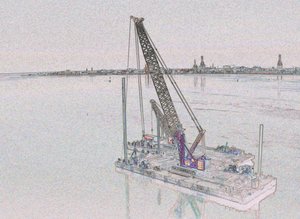
When I look at a sketch, I see the outlines of objects the artist projects. So I started with processing an image with an edge detection algorithm. These algorithms compute the difference in intensity of adjacent picture elements (pixels). When the intensity difference is small, then the point appears black. When the intensity is large, then the point appears white. Consequently edges (where there is a large intensity difference) will appear as while lines. But an artist sketches with a black pencil, so I inverted the image - white became black and black became white. Because these are color images, edges are computed for each of the three colors - red, green and blue. I then alter the black-white range of intensities so that I get a more balanced image. The results, as seen here, are interesting. Bibi, an art history student at UC Berkeley and friend of our family finds that these transformations bring something new to the art table - an improvement beyond simply copying an artistic style. posted at: 05:45